Anasacc Plus 300 g
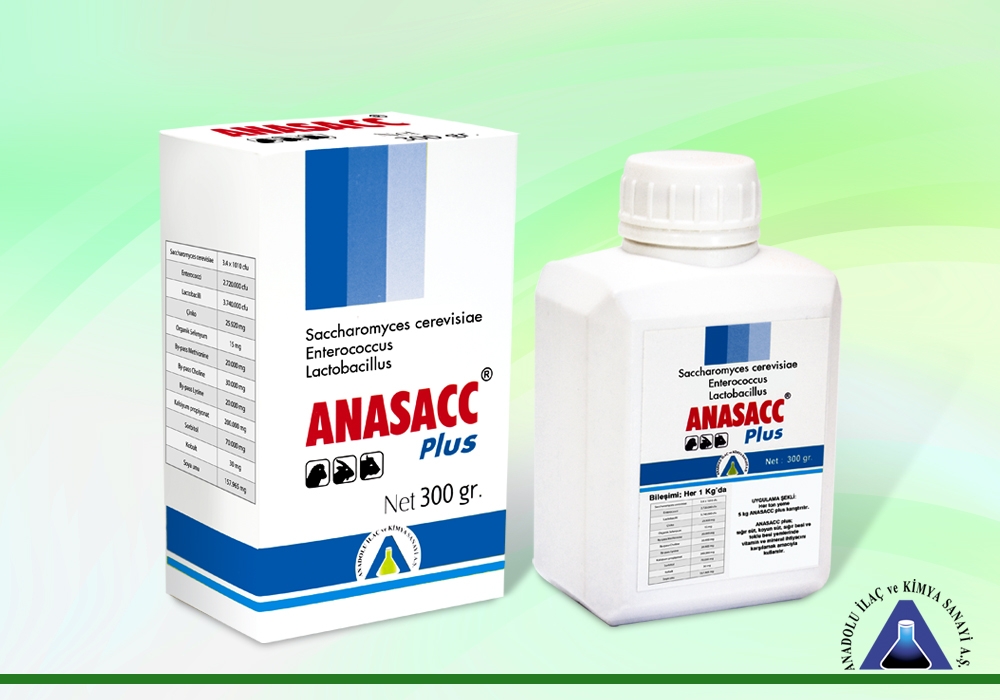
Anasacc®Plus 300 gFeed Additives
Composition: Every 1 kg premix;
|
Saccharomyces cerevisiae
|
3,4×10¹⁰ cfu
|
|
Enterococci
|
2.720.000 cfu
|
|
Lactobacilli
|
3.740.000 cfu
|
|
By-pass methionine
|
20.000 mg
|
|
By-pass choline
|
30.000 mg
|
|
By-pass lysine
|
20.000 mg
|
|
Zinc
|
25.920 mg
|
|
Organic selenium
|
15 mg
|
|
Calcium propionate
|
200.000 mg
|
|
Sorbitol
|
70.000 mg
|
|
Cobalt
|
30 mg
|
|
Soybean meal
|
157.965 mg
|
Indications: The probiotics contained in Anasacc Plus are biological products made up of cultures of useful microorganisms that are used as additives to regulate microflora balance in the digestive tract, prevent pathogenic microorganisms from becoming harmful and reproductive, and thereby increase feed utilization. Microorganisms used as probiotics in ruminants are generally Lactobacillus, Enterococcus bacteria and Saccharomyces cerevisiae yeasts.
- By using the oxygen in the rumen of young ruminants, it increases the number of anaerobic rumen microorganisms of cellulolytic, hemicellulotic, pectinolytic and amylolytic properties and the digestion of the feeds by increasing the total volatile fatty acids (VFA), acetic and propionic acid concentrations and facilitates the development of rumen flora and fauna. With the improvement of propionic acid production, the utilization of ration energy increases further.
- It has the effect of increasing feed consumption by increasing the flavor of the feed with glutamic acid it produces.
- Lowers the level of rumen lactic acid; decrease in lactic acid levels in rumen increases pH or provides stability in rumen.
- The inclusion of Saccharomyces cerevisiae in the feed of dairy cows increases milk yield, milk fat and protein.
- The use of Saccharomyces cerevisiae as a feed additive has the effect of reducing the NH3-N concentration in the rumen, thereby increasing the level of protein reaching the duodenum.
- Addition of Saccharomyces cerevisiae culture to the feed of dairy cattle under heat stress on hot summer days increases the utilization of feed by decreasing rectal heat.
- Addition of Saccharomyces cerevisiae may prevent the risk of acidosis, as well as the digestibility of low quality maize silages.
- Lactobacillus neutralizes E. coli enterotoxins by preventing coliform colonization by adhesion to the intestinal wall in cases of diarrhea in calves. At the same time, it reduces the pH of the intestine by secreting organic acids. Creates an environment that prevents the growth of E. coli prevents intestinal inflammation. With this effect, it increases feed utilization in calves.
- Addition of Lactobacillus to dairy cows rations increases milk yield.
- When Enterococcus is added to milk substitute feed, it strengthens the immune system and increases antibody levels.
- By-pass methionine positively affects choline metabolism and stimulates the synthesis of very low density lipoproteins in the liver.
- Milk protein level increases in dairy cows with the contribution of eating by-pass lysine and methionine. Milk urea nitrogen level drops. By adding by-pass lysine and methionine to the feed of high yielding dairy cattle and lactating goats, significant increases in milk yield, milk protein and casein content of milk occur.
- The addition of by-pass choline saves methionine, while the addition of by-pass choline after calving reduces non-esterifying fatty acids and the risk of clinical ketosis.
- Due to their lipotropic effects, they ensure full use of fatty acids for energy production. In this way, it can prevent fatty liver.
- They contribute to body growth and development and tissue repair.
- Antibodies that protect against body diseases have great contributions in hormonal balance and production of enzymes.
- It facilitates the absorption of calcium from the intestines.
- Sorbitol in the composition of Anasacc Plus has the same energy value as glucose.
Dosage and Administration: Each ton of food is mixed with 5 kg of Anasacc Plus.
Practically;
|
Cattle
|
500 – 600 kg/bw
|
50 – 70 g
|
|
Calve
|
50 – 60 kg/bw
|
7,5 g
|
|
Lamb
|
7,5 – 15 kg/bw
|
2 – 4 g
|
Marketing Packaging: 100 g and 300 g with prospectus in a cardboard box; 1000 g, 5 kg and 25 kg plastic buckets.
License Owner: Anadolu Ä°laç ve Kimya San. A.Åž. (Anatolia Medicine & Chemical Indusrty Co.)